Small Item Storage

Welcome, it is Bank Holiday weekend here in the UK and although the rain held off the weather has been pretty miserable so it could be the perfect time to carry out some of those oft put off tidying chores around the house.  So carrying on from my storage theme from last week when I blogged about home storage in the form of larger furniture pieces I thought I would tackle the matter of storage for all those smaller items around the home that somehow manage to mount up and can make our houses look cluttered and impractical   – keys and phones are just examples of items that could get misplaced under those piles of paperwork  adding to the daily stress of modern life.

I believe we need our storage to work doubly hard for us – to be pretty and stylish whilst still being practical.   For example in my house I use some clear glass vases to store my tea lights and a cut glass bowl houses some cutlery.  Here are a few examples:


IMG_1434

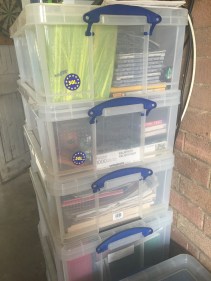
Practical garage storage

Sometimes it can seem like an overwhelming task when we are busy but my best advice would be to break the tidying and storage down into small achievable chunks tackling a room at a time.  It’s amazing how many piles you can get through in the half hour whilst you are waiting for the dinner to cook!   I always feel such a sense of satisfaction once I have my possessions neat and tidy with everything in its place it is like a weight lifted from my shoulders – I guess I could be described as a tad obsessive about this but for me the adage of tidy space, tidy mind definitely applies and I feel much calmer and lighter.

If you are looking for some inspiration for attractive and practical storage I have added some samples below:

All images above from The Holding Company

Images above from Marks and Spencer

Images above from Next

The above examples can be filled with all manner of items and then stored in cupboards or on shelving and when interspersed with other ornaments, vases or photographs etc can make for an eye catching and pleasing display that will make for a harmonious living environment.


The Benefits of Good Storage

The key to a well organized and efficient home has to be good storage.  This can encompass all manner of storage from defined wardrobe space through to a well placed trinket pot on the hall table to keep keys at hand.

A place for everything and everything in its place so the mantra goes x

We all know that modern life tends to be lived in a whirlwind breakneck pace with many different activities pulling us in all directions particularly if we have children.  But we can save precious moments throughout the day if our homes are well organized.  This has the added benefits of reducing the stress from hunting for those car keys to the de-cluttering of old items no longer used or broken.

What do we mean by good storage?  Well, we like our furniture to look good, be well made and functional and at a good price and we want it to work hard for us.  Sometimes it is hard to pinpoint the exact piece for a room and if this is the case it can be a good idea to have a carpenter make a bespoke piece for your room  This need not be as expensive as you may think.  In our lounge we had a cabinet and shelves fitted into an alcove beside the fireplace.  Some years later we called the carpenter back to make us a TV cabinet for the other side as we just could not find an off the shelf piece that we liked and it was no more expensive.
storage.5

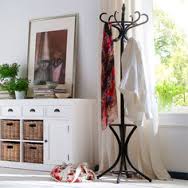
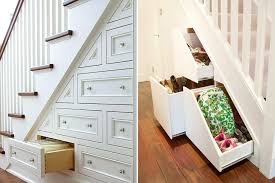
Let us work around the house starting with the hallway – this is often a problem area with a lot of through traffic, coats, shoes, wet dogs etc. It is a great idea to have a unit with some baskets that can contain anything from shoes, gloves, hats etc – if possible one for each member of the family so items don’t get mixed up.  Somewhere to hang coats whether it be a coat stand  or cupboard is essential to save for them all being piled over the banisters.  An excellent idea is to have drawers carved into the underneath of the stairs to take the strain.
storage.6

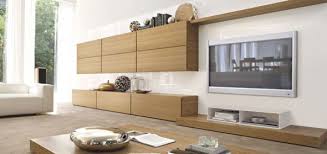
I touched on the lounge above, they do have to be flexible spaces being the place where family go to relax, watch TV, maybe do homework, hobbies, play computer games etc.
storage.7

Choose pieces that provide that storage but also where you can display a pleasing array of artifacts that you have collected together with photographs etc to make the space personal to you and your family.

Kitchens are notoriously hard to get right in terms of storage – the hardest working room in the house with a plethora of appliances and gadgets – not to mention space for food storage – it really deserves a blog post all of its own – but I think continual de-cluttering is key here particularly with out of date food stuffs that somehow get pushed to the back of the cupboards.  A mix of cupboards and shelves look modern; every day items such as plates and cups can be kept at hand and provide visual interest.  I would suggest that appliances for occasional use get placed in those high hard to reach cupboards if space allows or store in a understairs cupboard or garage.


Turning to the upstairs and with the bedroom in mind if you have the budget it is an opportunity to have some bespoke units which will fit into those awkward nooks and crannies. Alternatively chose a bedroom suite that can be flexible with a mix of plenty of hanging and drawer space and a dressing table area to display lotions and potions.  With this kind of furniture you can always add attractive storage boxes to sit on top of the wardrobes.


Bathrooms – storage in bathrooms can be flexible – re-purpose old shelves and cupboards to sit comfortably in the space to hold all manner of toiletries – again the humble wicker basket (my favourite kind of storage) will work wonders in this room.
storage.15

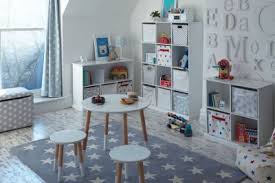
Children’s bedrooms and playrooms are another area where toys and paraphernalia can run out of control.  There are a multitude of systems on the market but a cohesive collection of labelled  baskets/buckets or drawers is a good place to start.  Include some shelving so that they can display their favourite toys or works of art.  Encouraging children to be tidy and organized and setting a good example is a good way forward.


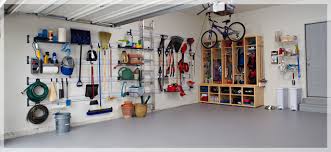
One area of a house that often gets overlooked is the garage – quite often the dumping ground for items broken or no longer wanted it can be a dark place.  The image below shows that with some organization it can be a space to be proud of with everything in place!
storage.18

Of course as well as being practical storage needs to be aesthetically pleasing to the eye –

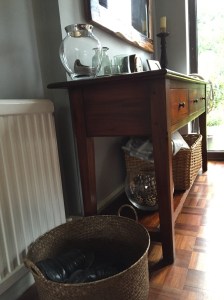
use a mix of textures – wicker is my favourite – but for storing smaller items a mix of bowls, vases, trays etc can be used.  One on-line store I have used is The Holding Company The holding company  who sell very versatile lines for everything from magazine to shoe storage.  Really though this is a sub-section of the above which I will come back to another time, but for now I hope that you have enjoyed my foray into storage around the home and hopefully have picked up a few tips!

IMG_1385


Ludovico Einaudi

It is with surprise that my first entry on my music section is for a classical composer.  Having been brought up on a diet of rock and disco/dance music and many styles in-between I always shunned classical music as old fashioned and fusty.

EINAUDI.1

However over the past 8 years or so the composer Ludovico Einaudi has wound his way into my heart and possibly into the psyche of the general public at large.   My journey began with my son’s piano lessons – suddenly he began practicing music that made my ears prick up – very simple, minimalistic pieces – he perfected 3 pieces and whilst he was playing them it brought tears to my eyes as I was thinking he would be away at university soon and I would miss him playing.  The following mothers day he brought me the album ‘Una Mattina

una mattinawhich I would play from time to time and after a while it caught the ears of hubby – we then bought some of his other albums Divenire, Nightbook, Islands.  Soon the whole family was loving his music; my daughter had it playing during her wedding breakfast meal.  We began recognizing some of his work on television commercials – his track Primavera was used for the Santander advert a few years back and more recently a track from one of his newer albums In a Time Lapse was the backdrop for a British Airways advert.

To give some information about his background he was born in November 1955 in Turin, Italy.  It is hard to classify his genre of music but it has been described as Neoclassical new-age music, minimalist, meditative and contemporary classical music.  After training at the Conservatorio, Milan he began his career as a classical composer and soon began incorporating other styles and genres including pop, rock world and folk music.  He collaborated with the theatre and dance world in the 1980s and 90s and from the mid-90s he began composing film soundtracks which include the score for the 2002 TV serial Doctor Zhivago and in 2010 the music for the trailer of Black Swan.  His music is also featured in the This is England TV dramas as well as Derek which was directed by Ricky Gervais.  Einaudi released his first solo piano album Le Onde in 1996 which enjoyed mainstream success particularly in Italy and the UK.  In 2001 he released I Giorni and that particular track was featured in a BBC promotion for arts and culture programmes and also in recent years was played on Radio 1 after Greg James championed the track for helping him with his university studies.  After multiple plays it reached number 32 in the UK singles chart in June 2011.  In 2006 Divenire was released (which means “to become” in English).  It was recorded by the Royal Liverpool Philharmonic Orchestra with Einaudi as the piano master.  Shortly after its release Einaudi went on a UK tour and the album topped the iTunes classical chart.  I have to admit that I think this is my favourite album of his.  One of the tracks “Fly” was used as theme music to popular TV drama series Doctor Foster last year.  Proctor & Gamble used an excerpt from “Divenire” for their TV commercial for the Olympics in 2012.

Divenire

nightbook

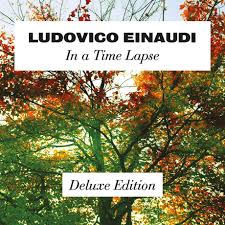
His next album to be released by Nightbook in 2009 when he took a slightly different direction incorporating synthesized sounds alongside his solo piano playing.  In 2013 he released In a Time Lapse which now includes a more orchestral feel and his newest album Elements released in October 2015 which again comprises of piano, electronic and orchestra.


We have been lucky enough to see him in concert twice – the first time we had seats near to the front at the Barbican Centre in the summer of 2013 when he was touring In a Time Lapse.  It was an amazing experience to watch him and his small orchestra playing and my eyes kept diverting to watch where each sound was coming from; there was a huge circular drum on stage and one member was switching from guitar to violin to triangle!  When we had the opportunity to see him in concert again in March this year we jumped at the chance – this time he was touring his newest album Elements.  This was equally as fascinating – there is so much to watch on the stage and now when I listen to the album I can visualize how the music is being played – I found the percussionist to be mesmerizing!

In a Time Lapse

If you get a chance I would urge you to take a listen to his music.  It is perfect for those moments when you want to just chill and escape from the frenetic pace of modern life.  When we have had friends round they have asked about the beautiful music we are playing.  Once you become acquainted you will be able to spot his music anywhere – it has a very distinctive style -I don’t watch much TV but in the past week it has been played on the BAFTAs and Britain’s Got Talent; it was all over the X Factor last year and I have even heard it on Top Gear and Match of the Day!


Grand Designs Live & Tandem Rides!

This week with a couple of days off following the bank holiday myself and hubby have been out and about.  Firstly we visited Grand Designs Live at Excel Centre in London.  If you are a fan of the TV programme like myself, and with a soft spot for Kevin McCloud, it is an opportunity to get a taste of the show in the flesh so to speak.  We tend to go every year, just as a day out as I commented before that in my dreams I would love to undertake my own Grand Design but the reality is that unless we win the Lottery it is not looking likely any time soon – so this is the next best thing.  The exhibition is on twice a year – end April/May at Excel in London and in October  at Birmingham’s NEC.

GD1

For the last couple of years we have treated ourselves to VIP Tickets and think that this does really cost in – you get a free guide, Grand Designs magazine, a zoned out resting place where you can also leave coats and any purchases you make during the day.  There are also lots of nibblies to keep you happy and also a glass of bubbly to be enjoyed.  I have found that this is enough to keep me energized throughout the day without having to splash out on extra coffees and sweet treats.

gd4


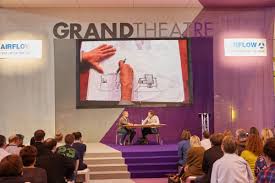
The exhibition is zoned into 6 different areas: these are Grand Build where there is a self build centre, Grand Gardens where there are some show gardens, Grand Kitchens & Bathrooms which has live kitchen demonstrations and the VIP Lounge to the outer edge, Grand Interiors where there are some designed room sets and live theatre talks, Grand Technology and Grand Village which contains the RIBA house of the year model village, Kevin McCloud’s Green Village and the Grand Theatre which has a timetable of talks throughout each day.  There is also a Design Arcade where you are able to purchase artworks, rugs and various smaller items.  There are various cafe’s dotted throughout the space so no need to go hungry at all.

I think that the overall idea of the show is to go along and gather information, talk to experts, get a feel of new ideas and materials on offer, rather than a show to visit with a view to buying lots of  accessories for the home (although as above there are some stalls available) – although of course you can place orders at the stalls if you are in the market for a fantastic new bathroom or living green roofing for your new extension.

I like to try and catch some talks whilst I am there and this year we managed to catch a couple of good ones.  Firstly a talk from a popular design consultancy Two Lovely Gays whom I had read about previously in one of my magazines Two Lovely Gays website.  I found their talk very informative, they spoke about how your experience of life should be enhanced by the space that you live in – that you should listen to the space you are in and three key words when thinking about the design of an interior space are function, colour, material.  More so than ever before people live in FOMO – Fear of Missing Out – it is good to keep up appearances but you need to see how things work for you and try not to follow trends just for the sake of it.  They spoke about 3 kinds of shopper – the micro shopper – who buys an array of items just because they love them and then as an afterthought try to work out where they are going to place the item – the message here is try for a cohesive scheme – secondly the inspiration hoarder – the Pinterest junkie – try to identify what you like about the image but don’t let it control you.  Lastly the collector  – the message here is enjoy what you love and show it off to bring your personality into the space.

gd3

The 2nd talk we went to was with the lovely Charlie Luxton – who I admit I have a bit of a TV crush on – he presents such programmes as Building the Dream, Dream Homes by the Sea and his latest series Dream Homes by the Med.  The idea of this talk was that he took some design plans for a new build house for a lady and her daughter who were on stage with him and he went through them to try and help them improve the design.  There was a cameraman behind him so the plans were blown up onto the big screen.  By the end of the session he had changed virtually everything about the plans and it was really interesting to watch an expert at work.  All in all a very nice day out!


The following day we awoke to beautiful weather, which has been a rarity of late, so to set the day off right we went for a refreshing swim followed by breakfast in the garden and then got our tandem ready for its first outing of the year!  We have had our tandem for a couple of years now and it has been a revelation to me as I am one of the few people to not ride a bike – (it is a balance thing!) – but sitting on the back of the tandem is a breeze – quite literally – although I confess it is hard work as hubby is a good cyclist and doesn’t hang around speed wise – although the tandem has a heavy frame – it is a Dawes Touring aluminium frame – and the weight of the 2 of us does not make for racing speeds!  We set out for a local garden centre.  It was good to be out on the road again, luckily it wasn’t too busy being a Wednesday mid-morning and we soon got into the swing of the push and pull of the pedals.  I love the feeling of freedom, with the breeze gently blowing on your face and the scenery soon changed to open fields.  Once we had arrived and parked up the bike we had a browse around the gorgeous products and plants and then for my favourite part – their cafe with their amazing scones – literally the best I have ever tasted! and a welcome cup of tea.

Then it was back on the bike with a different route home through smaller country lanes with some lovely scenery.

It was a great feeling to be out and about again.  We are planning to do many more rides throughout the summer and with an event booked in August for cycling around the Norfolk Broads, we will need to get some training in for that!


Architecture Through The Ages

This week is the first in a mini-series I shall scatter throughout the next few months taken from one of the assignments for my course all about architecture throughout the last 5 centuries.  I am starting off with my favourite type of architecture from the Georgian period.

18TH CENTURY HOUSE

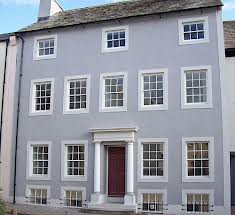
This large 18th Century town house is to be found on Queen Street in Whitehaven and is typical of houses in rows of terraces that were springing up all over the country during the 18th century.

18th century georgian house

By the early 18th century Europe was enjoying a period of relative peace and economic prosperity.  Manufacturing output fuelled by technological innovation made Britain the world’s first urbanised and industrialised society.  It was under this wealth of  circumstances that groups of houses aligned side by side in rows first emerged.  Later called terraces their appearance became synonymous with the four successive King Georges throughout the 18th Century.

However the architecture took influences from the late 17th century and spurred on by Inigo Jones and Palladianism, and the various European architectural books that were published the Georgian architects were producing buildings that followed these clean lines and symmetrically proportioned facades.  It was also the first time that properties were built ‘double pile‘ which instead of arranging rooms side by side around a courtyard, rooms were built one behind one another, two deep, with access via an internal corridor,  under a single roof.  These homes were more compact, allowing for more to be built in the upcoming urbanized cities. This also reduced the amount of walls and roofing and therefore the roofs were designed in a ‘hipped’ style; the four sides slope to the exterior walls of the building rather than creating gables at either end as a pitched roof does and was essential in spanning the deeper double-pile layout.  The neat rows of sash windows and regimented chimney stacks point towards a greater formality in outward appearance.

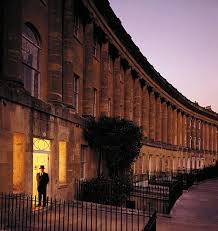
The windows were divided by thin, delicate wooden glazing bars.  The windows of a Georgian property were always symmetrical and a dominant, elegant feature, but there was a fine balance between ‘a house of glass and a heap of brick’.  The upper windows on many Georgian houses are smaller having only 6 panes as opposed to 12 on the lower floors. This was partly because these were usually only servants rooms, partially housed in the roof but also, from the street level, it has the perspective of actually making the building look taller. Front doors were usually solid and painted in dark colours.  Most usually they were paneled (imitating panelling that was often found internally on walls) with brass wear centrally placed.  Rows of terraces were mostly built of brick and were often rendered and had painted exteriors in an array of colours.  Some terraces, in Brighton for instance, were stuccoed with a white facade, whilst others in East London for example, showed the original brick facade.  However the infamous  Royal Crescent in Bath was built in stone.

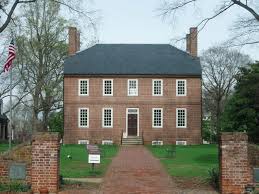
This house has a large central classical style doorway. It was quite usual to see steps leading up to the front door with a pedimented porch which would be composed of supporting turned posts or columns which support the architrave; the beam that rests horizontally across the top of the posts or columns.  It could be said that Form not Function was the chief concern of the 18th Century architects and the Georgian period is said to have produced Classical architecture.

Servants rooms were often found in the attic or otherwise sharing the basement but these were often dark, damp places usually noted for storing food and cooking.  In an effort to allow natural light into the lower levels of the building the terrace was set back from the street set back behind neat rows of iron railings.  Access to the ground floor was by a series of steps. It stems from Palladianism that the most beautiful features of a building should be placed most in view; and those of a plainer kind should be concealed from sight as much as possible.

This house has proportion and scale in varying degrees.  The pitch of the roof is small in relation to the height of the building.  The top windows are again small in scale to the other windows which are all of equal size.  Due to the number of windows this is where the emphasis of this property lies and gives it rhythm and repetition and a harmonious feel.  The front door stands out with its large columns particularly with the door being painted in a contrasting colour.  For me this is my favourite period of architecture which I find very pleasing to the eye.

symetrical windows and door

I have added below lots of lovely pictures from the era, including exterior and interior shots:

georgian.m

Images via Google Images