This week I have been thinking about my favourite piece of furniture – an item we use multiple times a day – yes, the humble chair. I love that there are so many different varieties; different textures, colours and purpose – for dining, for lounging, for working etc.
However there are a sub-section of chairs that stand out from the rest that have become icons in the market – these are more often than not mid-last century design led – and some of my favourite ones I will share below:-
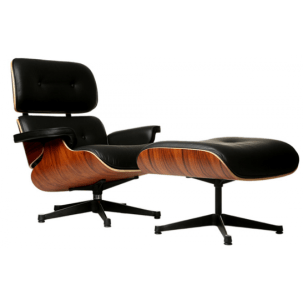
Eames Lounge Chair & Ottoman
I think that this must be the most coveted of all chairs. Designed by husband and wife team Charles and Ray Eames, it was their aim to produce furniture that could be mass produced and affordable (more on that later), with the exception of the lounge chair which was designed for the high end market. The chair consists of three curved plywood shells; the headrest, the backrest and the seat. Originally the shells consisted of five thin layers of plywood covered by a veneer of Brazilian rosewood. However this practice was discontinued in the early 1990s and currently production consists of seven layers of plywood covered by finishing veneers of cherry, walnut, and Palisander rosewood (similar grain patterns to the original Brazilian but sustainably grown), and other finishes. The layers are glued together and shaped under heat and pressure. The seat cushions are sewn with a zipper around the edge. The chair first came into production in 1956 – and is still in production today via Herman Miller and Vitra, although other companies produce direct copies. This is definitely on my wishlist!
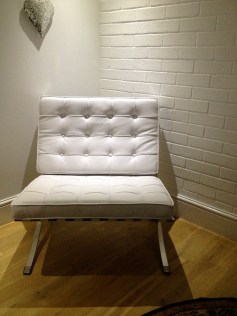
Barcelona chair
I love the Barcelona chair – this is my one – although not an original one, mind! This chair was designed by Ludwig Mies van de Rohe (one of the first modernist architects who drove the German Bauhaus Design School in-between the war years). He designed the chair with his partner Lilly Reich, although she doesn’t seem to get much of a mention these days. Originally the frame was designed to be bolted together, but in 1950 with the development of stainless steel the chair was re-designed with a seamless metal frame. The only other change to the design is that cowhide now replaces the expensive pigskin which was used in the original design. The chair has now been in production for almost 90 years – having first been shown in 1929. The chair was honored with the Museum of Modern Art Award in 1977 and it just a perfect piece of furniture – modern and timeless.
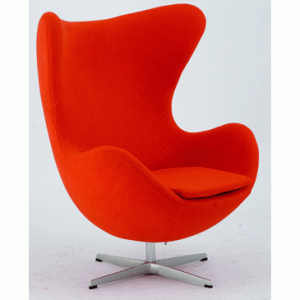
Egg Chair
The egg chair was designed by Danish designer Arne Jacobsen in 1958 and was originally meant to replace the couch or sofa. They were much in demand due to their unusual aesthetically pleasing looks and comfort, however most of the chairs created were for the Radisson Hotel and were highly expensive. The originals were covered in two cowhides sown together. In 2008 Fritz Hansen, the producers of the original chair produced 999 limited edition egg chairs to commemorate 50 years of production. These were produced in leather and suede and every one has an exclusive number engraved on the seat of the chair. These days imitations of the egg chair are widely available in a variety of finishes and fabrics.
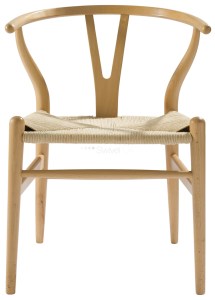
Wishbone Chair
The wishbone chair is the epitome of the classic dining chair designed by Danish designer Hans J. Wegner. It is a very simple design but handmade with fine craftsmanship. The hand weaving of the seat is one of the final processes of the chair’s construction, which is incredibly strong and is reported to have a life cycle of approximately 50 years. This chair first came into production in 1950.
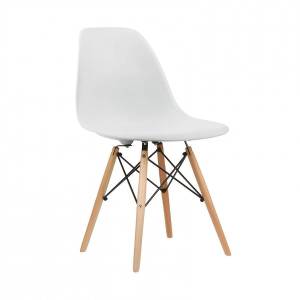
DSW Eames Chair
Back to the infamous Charles & Ray Eames who described their ethos as ‘getting the most of the best to the greatest number of people for the least’ – and so this fiberglass chair first appeared on the market in 1950. The chair was designed for the ‘International Competition for Low-Cost Furniture Design’ which was staged by the urgent need in the post war period for low-cost housing and furniture designs. The chair came in a variety of colours and bases with there also being armchair and rocker designs. Initially there was a long period of product development which involved shaping the fiberglass material with metal molds using a hydraulic press. The armchair was the first one-piece plastic chair whose surface was left uncovered and not upholstered. The chairs are still in production today by Herman Miller, Modernica and Vitra with each using a different material for their chair. Vitra discontinued production of the fibreglass shells in 1993 and now uses polypropylene which is a more environmentally friendly material. This is the chair I am hankering after for my new kitchen update!
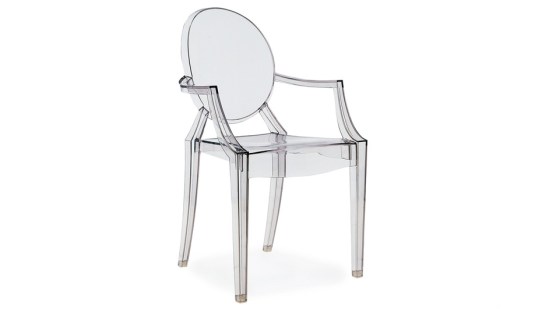
Louis XV Ghost Chair
This chair is relatively new, being designed in 2002 by Philippe Starck who was more renowned as a luxury hotel designer. He collaborated with the Company Kartell during the 80s and 90s with a view to adding his flair to their ethos of developing eco-friendly, contemporary plastic furniture. Indeed the chair has been developed with the use of polycarbonate recyclable plastic. With influences taken from the classic Louis XV armchair, the result is a post-modern fusion of innovation and historic style. I admit I do own one of these chairs which sits in my office/study and has become a modern classic; in fact I have read that it is the most popular ‘original design’ in history.
Well that is the end of my brief look at a selection of iconic chairs but there are endless other georgeous chairs on the market, so please feast your eyes on the ones below:)


Information sourced from Wikipedia and images from Google images
 pebblestoneliving.com